If you know me well, you know nothing annoys me more than the words, “healing,” “retreat,” and “reset.” Literally everywhere I look lately, someone is offering a "5-minute nervous system reset” or a retreat that promises some type of reset.
Usually they’re paired with a breathing exercise, a cold plunge, a supplement, a stretch, a meditation app, or a promise that if you just follow these three simple steps, you'll finally feel regulated.
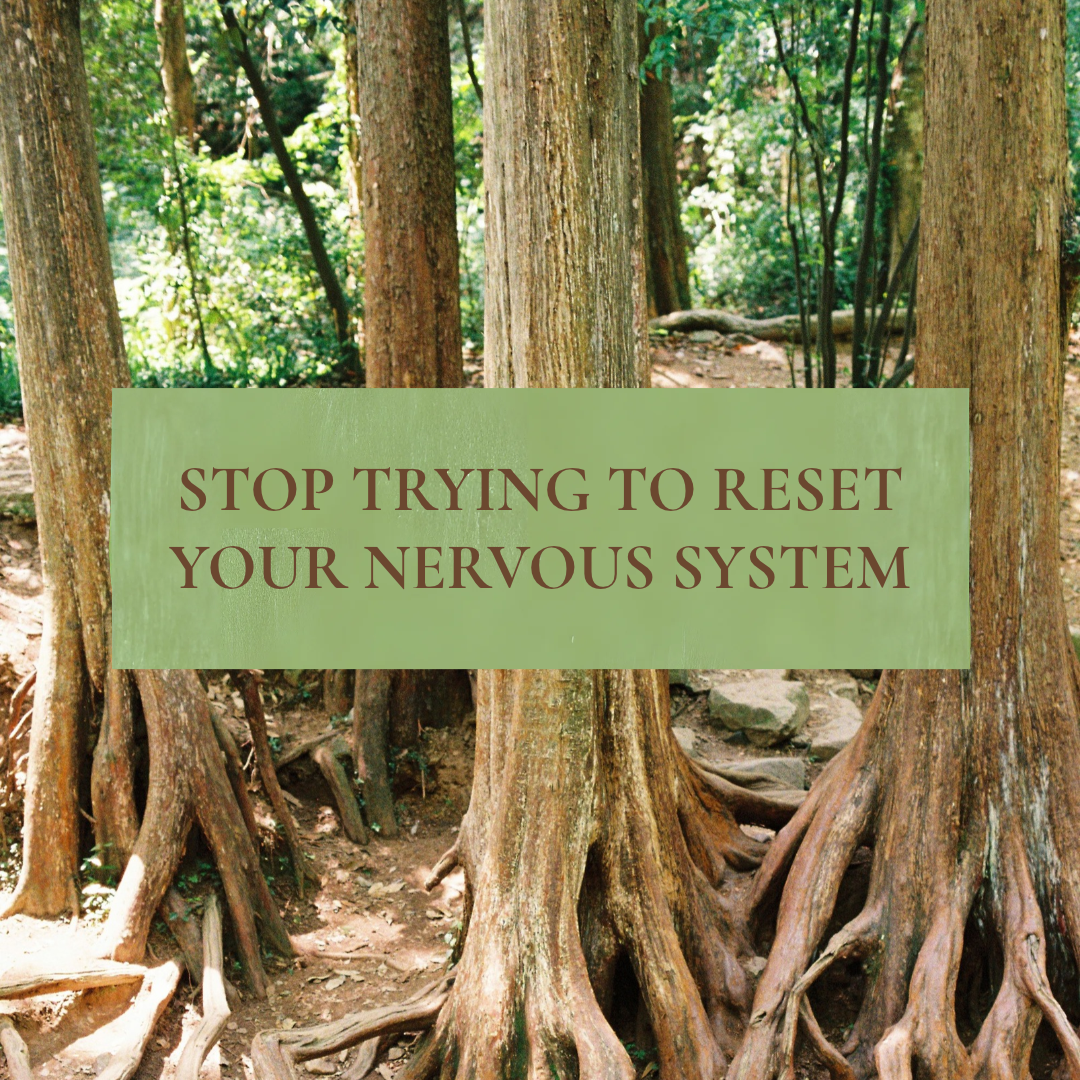
And every time I hear the phrase, a part of me cringes. Because we as humans are not a frozen computer or phone, but that is exactly how we’ve started talking about ourselves.
When Did We Start Treating Humans Like Technology?
Notice the language we use: Reset your nervous system, rewire your brain or upgrade your performance. This language comes straight from the world of computers and technology (yuck).
When your computer starts acting strangely, you restart it. During that reboot, the software closes. The glitches disappear and everything comes back online with a clean slate. It is a very simple solution. Great, right? Wrong. Because people aren’t freaking computers and we are SO much more complex than that.
Our nervous systems aren’t operating system software. Our nervous systems don’t malfunction because you had a stressful week. It doesn't contain a hidden reset button waiting to be pressed. And yet, many of us secretly wish it did.
The Appeal of the Reset
I actually understand why the term became popular. Most people aren't thinking:
"How can I cultivate greater autonomic flexibility?"
They're thinking:
"I'm exhausted."
"I'm anxious all the time."
"I can't turn my brain off."
"I don't feel like myself."
When we are overwhelmed, "reset" sounds incredibly appealing. Perhaps a reset promises immediate relief, a fresh start, a return to “normal” or an end to what you’re feeling. In a society that is constantly asking more of us, who wouldn’t want that?! The word itself offers hope. But it also creates a subtle misunderstanding about how “healing” works.
Your Nervous System Is Not Broken
Here's what often gets overlooked:
Most nervous systems are doing exactly what they were designed to do. If you feel anxious, hypervigilant, shut down, overwhelmed, irritable, disconnected, or constantly on edge, it doesn't necessarily mean your nervous system is malfunctioning. It may be adapting or AKA trying to protect you.
It may be responding to stress, uncertainty, grief, chronic demands, relationship dynamics, trauma, lack of support, sleep deprivation, financial pressure, parenting responsibilities, or years of learning what was necessary to stay safe.
The nervous system's primary job isn't to make you calm. It's to keep you alive. And sometimes that means shutting down, freezing, or scanning for danger. These responses aren’t evidence of failure, they are evidence of adaptation.
What People Actually Mean When They Say "Reset"
I’m going to be harshly honest for a hot second here. Nobody finishes a walk in nature and literally resets their nervous system. Nobody takes three deep breaths and erases years of stress or trauma. Nobody does a grounding exercise and returns to factory settings.
What people are often describing is something much more nuanced but rarely ever mentioned! Perhaps they feel more present, less activated, more connected to those around them, more settled, more capable of responding instead of reacting.
Those are meaningful shifts, but they aren't resets. They are moments of regulation, safety or connection. Moments where the nervous system receives enough information to stop working quite so hard.
A Better Metaphor
If we need a metaphor, I think a tree works better than a computer.
A healthy tree isn't rigid. It bends, it sways, it responds to changing weather. Strong winds move it. Storms impact it. But when conditions change, it gradually returns to center. The goal isn't to become a tree that never moves. The goal is to become a tree that doesn't stay bent over long after the storm has passed.
The same is true for your nervous system. The goal isn't never feeling stressed again, yet it is having the capacity to move through stress, grief, disappointment, you name it, without getting permanently stuck there.
The Hidden Cost of "Reset" Culture
The part that concerns me most is what happens when people believe they should be able to reset themselves on command. Because then every activation feels like failure.
You're anxious again? You must need another reset.
You're overwhelmed again? You must be doing something wrong.
You're stressed after a difficult conversation? Apparently the last reset didn't work.
This creates a relationship with the nervous system based on fixing, managing, and correcting, as if your nervous system is the problem. As if every uncomfortable feeling is evidence that something needs repair. But our nervous systems do not ask to be fixed!
I promise you, they are simply asking to be understood.